Information about the partnership
The Moldovan economy is growing faster than the EU average despite challenging political and economic conditions, particularly as a result of the Russian war of aggression against Ukraine. Although the economy is still strongly characterised by agriculture and the export of agricultural products, it offers great potential for growth and development in the areas of infrastructure, agriculture, tourism, energy, digitalisation and the manufacturing industry. Partnering in Business with Germany actively promotes cooperation between German and Moldovan SMEs. SMEs form the backbone of the Moldovan economy.
Focus Areas and Cooperation Potentials of Moldova
Moldova has potential particularly for developing its agricultural sector and the related industries. The climate favours food and wine growing. Food, beverages and tobacco, textiles and machinery make up the largest share of the country’s exports. Germany is one of the most important exporters to Moldova. Investments go into energy efficiency in buildings, the modernisation of the waste management system, the construction of solar farms, the modernisation of the railway infrastructure and national roads, and in the expansion of the road network. The government of Moldova, with the support of Germany, is helping SMEs gain access to finance via its investment funding programme, which was launched in June 2023. SMEs seeking to invest in digitisation, new business models, machinery and equipment can receive low-interest loans. The Association Agreements with the EU open up opportunities for economic cooperation between the two countries.
Business in Moldova – Opportunities for German Companies
There are promising and diverse opportunities for German companies in Moldova. The country offers a favourable business environment characterised by liberal economic policies and a strategic location between Europe and Asia. Furthermore, German companies benefit from existing free trade agreements, in particular the association agreement with the EU. Germany is a key partner in expanding food exports to the EU. This is partly due to disrupted supply chains and declining trade relations with Russia and CIS states.
Moldova is striving for closer ties with the EU economy and actively promoting B2B cooperation. This creates opportunities for German companies to utilise their products and technologies in an emerging market. EU financial aid and support for the private sector also present further investment opportunities. The Moldovan government promotes foreign investment and provides support for setting up businesses, particularly in the IT sector.
In particular, the Moldovan government is focusing on modernising small and medium-sized enterprises and the agricultural sector and is driving forward the expansion of renewable energy sources and increasing energy efficiency in the country. Funding is being channelled into projects that promote the expansion of PV systems, improve energy efficiency and increase the thermal insulation of buildings. These developments create interesting business opportunities for German SMEs in Moldova, particularly in the agricultural sector and in renewable energy. In the food industry, there is high demand for German innovations, such as sorting and packaging machines and refrigeration units, to modernise production.
Moldova’s main exports are foodstuffs, particularly wine, fresh and dried fruit. Moldova’s main imports from Germany are motor vehicles and parts, as well as machinery and chemical products.
Industry Focus and Participant Profiles
Partnering in Business with Germany is open to executives from all sectors. The largest group of Moldovan executives taking part in the programme work in agriculture and the food industry. There is growing interest in renewable energy as investments in energy-efficient buildings and solar energy in the country rise.
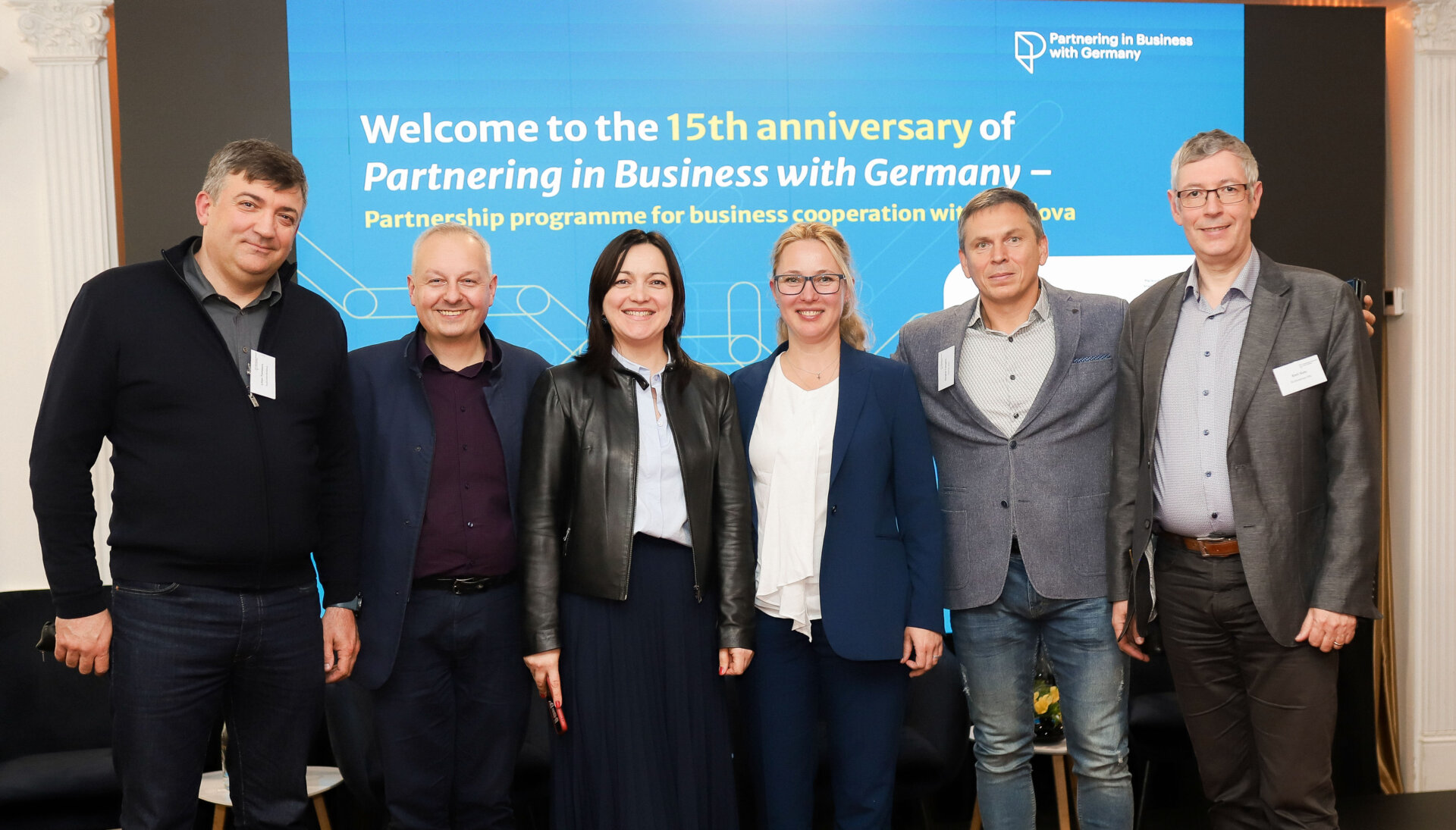
Moldova’s alumni organisation (Invent Moldova) has been connecting former programme participants since 2010 by regularly holding seminars, workshops and networking events.